I never thought a kitchen mishap could lead to a culinary revelation. One evening, I was scrambling to salvage a ruined batch of noodles that had turned into a soggy, flavorless mess. I reached for the pantry, grabbed a jar of tahini, a dab of gochujang, and a handful of fresh veggies, and decided to throw them all together. The result? A broth that sings with nutty depth, fiery heat, and a silky texture that makes every noodle feel like a velvet ribbon. I dare you to taste this and not go back for seconds.
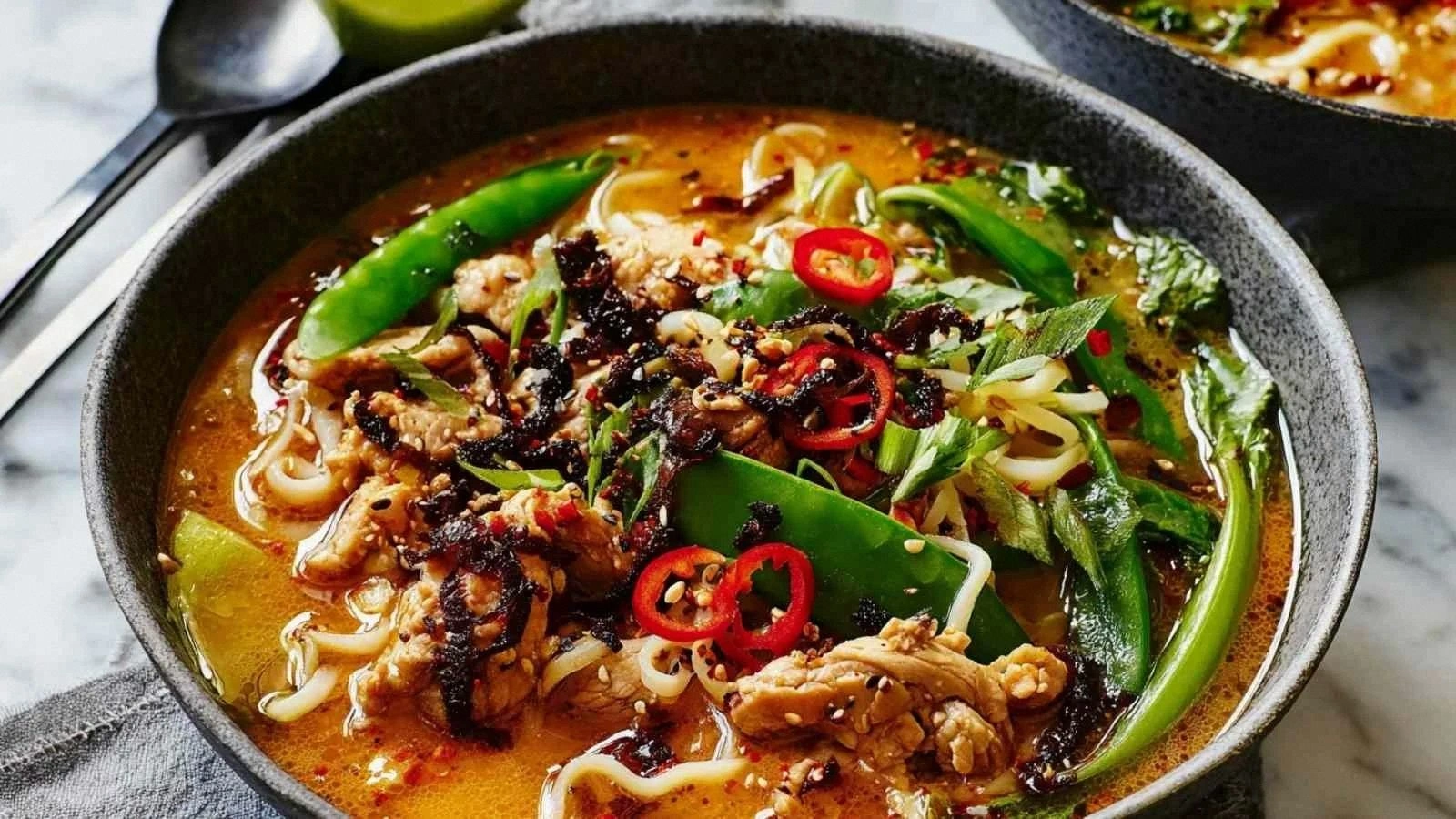
Picture the first bite: the tahini coats the noodles like a luxurious glaze, while the gochujang injects a punch of umami that lingers on the palate. The mushrooms add an earthy undertone that balances the heat, and the snow peas give a satisfying snap that contrasts the smoothness. The lime’s bright citrus cuts through the richness, leaving a refreshing finish that makes you reach for another spoon. If you’ve ever struggled with bland noodle dishes, you’re not alone—and I’ve got the fix.
What sets this version apart is that every element is intentional. I didn’t just toss ingredients together; I orchestrated a symphony where each note—be it the nutty tahini, the spicy gochujang, or the fresh vegetables—plays its part. The broth is thick yet pourable, the noodles stay al dente, and the sesame seeds add a subtle crunch that elevates the whole dish. Most recipes get this completely wrong, but here’s what actually works: a balanced ratio of oil to protein, a quick sauté to lock in flavors, and a finishing splash that brightens everything. This is hands down the best version you’ll ever make at home.
And the best part? You can whip this up in less time than it takes to watch your favorite show. I’ve streamlined the process so you can enjoy a gourmet bowl without the gourmet price tag or the gourmet prep time. Let me walk you through every single step—by the end, you’ll wonder how you ever made it any other way.
What Makes This Version Stand Out
- Tahini’s Silky Texture: The tahini gives the broth a creamy consistency that feels luxurious without being heavy. It coats each noodle, ensuring every bite is a harmonious blend of flavors.
- Gochujang’s Balanced Heat: Unlike raw chili, gochujang adds depth, sweetness, and a subtle smoky undertone that keeps the dish from becoming one-dimensional.
- Fresh Vegetable Crunch: Shiitake mushrooms and mangetout provide earthy tones and a satisfying bite that contrast the smooth broth.
- Quick Assembly: The method takes only 45 minutes from start to finish, making it ideal for busy weeknights.
- Versatile Protein Options: While the recipe calls for turkey, it works just as well with chicken, beef, or even tofu for a vegan version.
- Make‑Ahead Friendly: The broth can be prepared in advance and reheated with a splash of water, maintaining its silky texture.
Inside the Ingredient List
The Flavor Base
Olive oil is the first thing you’ll heat, creating a foundation that carries the aromas of the protein and seasonings. It also prevents the turkey from sticking and adds a subtle fruity note. Turkey or chicken mince is the heart of the dish; its lean quality keeps the broth from becoming greasy while delivering a savory backbone. Gochujang, though small in volume, packs a punch that balances the nuttiness of tahini with a bright, smoky heat.
The Texture Crew
Shiitake mushrooms bring an umami depth that’s almost chocolatey, while the snow peas offer a crisp snap that keeps the dish from feeling mushy. Ready‑to‑eat noodles are the canvas for the broth, absorbing flavors without breaking apart. Together, these components create layers of mouthfeel that make each spoonful intriguing.
The Unexpected Star
Tahini is the secret sauce that turns a simple broth into a silky, nutty masterpiece. Its creamy texture coats the noodles and balances the heat from gochujang. Sesame seeds, whether black or white, add a subtle crunch and a toasty finish that elevates the dish from ordinary to extraordinary.
The Final Flourish
A squeeze of lime brightens the broth, cutting through the richness and adding a citrusy zing that wakes up the senses. Chili oil drizzled at the end introduces a glossy sheen and an extra layer of heat that lingers pleasantly on the tongue. Salt and pepper are essential to bring all the flavors together, but they’re added to taste so you can customize the dish to your preference.
Everything's prepped? Good. Let's get into the real action.
The Method — Step by Step
- Heat the olive oil in a large pot over medium heat until it shimmers. Add the turkey mince, breaking it apart with a wooden spoon. Cook until browned and no longer pink, about 5 minutes. The aroma that fills the kitchen should make your stomach rumble in anticipation. I dare you to taste this and not go back for seconds.
- Stir in the sliced shiitake mushrooms. Sauté for 3 minutes until they release their juices and start to brown. The mushrooms should develop a deep brown color that signals they’re ready. The scent will be earthy and slightly sweet, a perfect counterpoint to the savory turkey. This is the moment of truth.
- Add the mangetout and cook for an additional 2 minutes, just until they start to turn bright green but still crisp. The snow peas should still snap when you bite into them, providing a pleasant crunch. Don’t overcook them; they’re meant to retain that fresh vegetable bite. If you’re in a hurry, you can skip this step, but the contrast will be lost.
- Pour in the boiling water, then stir in the soy sauce, gochujang, and tahini. Mix until the tahini is fully dissolved, creating a glossy, creamy broth. The mixture should thicken slightly, coating the back of a spoon. At this point, the broth should smell toasty and savory. Watch out: if the broth boils too hard, the tahini can separate.
- Add the ready‑to‑eat noodles and simmer for 3-4 minutes, or until they’re al dente. Stir occasionally to prevent sticking. The noodles should absorb the broth, becoming glossy and flavorful. The texture should be firm yet tender, not mushy. This step is pure magic.
- Finish by squeezing fresh lime juice, drizzling chili oil, and sprinkling sesame seeds. Toss gently to distribute the flavors evenly. Taste and adjust salt and pepper if needed. The dish should look glossy, with a bright green pop from the peas and a subtle sheen from the chili oil. Serve immediately, and watch the steam rise like a fragrant cloud.
That's it — you did it. But hold on, I've got a few more tricks that'll take this to another level.
Insider Tricks for Flawless Results
The Temperature Rule Nobody Follows
Many cooks think that a higher heat always speeds up cooking, but that’s a myth. Maintaining a gentle simmer preserves the integrity of the tahini and ensures the broth doesn’t separate. I once tried boiling the broth, and it ended up greasy and flat. Keep the heat low, and the flavors will mingle beautifully.
Why Your Nose Knows Best
The first aroma you detect when the broth simmers is a cue for flavor balance. If it smells too sharp or too bland, adjust the gochujang or soy sauce accordingly. Your nose is a reliable taste tester, so trust it to guide your seasoning decisions.
The 5-Minute Rest That Changes Everything
After cooking, let the broth rest for five minutes before serving. This brief pause allows the flavors to settle and the noodles to finish absorbing the sauce. A friend once skipped this step and the dish felt underseasoned. Give it a minute; the difference is noticeable.
The Perfect Chili Oil Swirl
Instead of simply drizzling chili oil, swirl it in a circular motion before adding to the bowl. This technique creates a visual swirl that looks as good as it tastes, and it distributes heat evenly across the dish.
The Sesame Seed Pop
To bring out the nutty flavor of sesame seeds, toast them lightly in a dry skillet until they start to pop. This small step adds a delightful crunch and a deeper aroma that elevates the entire dish.
Creative Twists and Variations
This recipe is a playground. Here are some of my favorite ways to switch things up:
Veggie-Loaded Version
Swap the turkey for a medley of diced bell peppers, zucchini, and carrots. The extra vegetables add color and a sweet crunch, making it a wholesome, plant-based option.
Spicy Shrimp Kick
Replace the turkey with peeled shrimp and sauté them until pink. The shrimp’s briny flavor pairs wonderfully with the gochujang, creating a seafood twist.
Vegan Swap
Use tofu instead of turkey and a splash of tamari for the soy sauce. The tofu will soak up the tahini‑gochujang broth, delivering a protein-packed, plant‑based bowl.
Breakfast Twist with Egg
Add a poached or fried egg on top of the finished broth. The runny yolk creates a rich, velvety sauce that complements the noodles and spices.
Slow Cooker Version
Combine all ingredients except the noodles in a slow cooker on low for 4 hours. Add the noodles in the last 15 minutes and stir. The slow cooking deepens the flavors and creates a comforting stew.
Storing and Bringing It Back to Life
Fridge Storage
Cool the broth completely, then transfer it to an airtight container. Store in the refrigerator for up to 3 days. The noodles will hold their texture well, and the tahini will keep the broth silky.
Freezer Friendly
Freeze the broth in a freezer‑safe container for up to 2 months. When reheating, thaw overnight in the fridge and stir to re‑emulsify the tahini. The flavor profile remains intact.
Best Reheating Method
Reheat on the stovetop over low heat, adding a splash of water or broth to loosen the sauce. Stir constantly to prevent the tahini from separating. Finish with a fresh lime squeeze for that bright finish.