I was standing in my cramped kitchen, eyes flicking between a half‑cooked shrimp and a burnt pot of broth. The air smelled like disappointment and burnt garlic. I thought, “This is a culinary tragedy.” But then I remembered that my grandma used to make the most daring tom yum, and I decided to give it a shot.
The first thing that hit me was the sharp, citrusy aroma of lemongrass, mingling with the earthy scent of galangal. My ears caught the faint hiss of a bubbling stock as the kaffir lime leaves unfurled like tiny green fans. The visual of bright red chilies cutting through the amber liquid was a promise of heat. The taste, I knew, would be a dance of sour, salty, and spicy, with a whisper of sweetness.
What makes this version unforgettable is that it doesn't rely on pre‑made pastes or bottled sauces. Every component is fresh, every flavor is layered, and the broth sings with authenticity. It's a bowl of liquid sunshine that makes your palate do a happy dance. I dare you to taste this and not go back for seconds.
I also discovered a trick that turns a simple shrimp into a velvet‑like morsel: a quick sear in a hot pan before adding it to the broth. That tiny caramelization locks in the briny flavor and gives the shrimp a subtle, almost buttery finish. The result? A soup that feels like a hug on a rainy day. Let me walk you through every single step — by the end, you'll wonder how you ever made it any other way.
What Makes This Version Stand Out
- Boldness: This soup refuses to be a timid, watered‑down version of itself. The broth is a bold, head‑spinning citrus punch that cuts through the richness of the shrimp.
- Freshness: Every herb, every slice of lime, every piece of galangal is plucked from the garden or market that day. The result is a soup that tastes like the season, not a canned mystery.
- Simplicity: No need for a dozen jars of sauce or a complicated spice blend. Just a handful of ingredients and a single pot.
- Crowd Appeal: Whether you’re a seasoned foodie or a beginner, the balance of heat, sour, and salt invites everyone to dive in.
- Texture: The shrimp is tender yet slightly firm, the vegetables crisp, and the broth silky without being heavy.
- Make‑ahead Potential: The broth can be brewed a day ahead and re‑heated with a splash of water to preserve its brightness.
Inside the Ingredient List
The Flavor Base
At the heart of Tom Yum lies a clear, aromatic broth that carries every other element. The stock is typically made from water or light chicken broth, simmered with whole kaffir lime leaves, sliced galangal, and a stalk of lemongrass. Each component releases its own citrusy, earthy aroma, creating a fragrant canvas for the shrimp and vegetables. If you’re aiming for a richer depth, a splash of coconut milk can be added at the end, but keep it minimal to preserve the bright acidity.
The Protein Pack
Shrimp is the star of this dish, bringing a sweet, briny flavor that pairs perfectly with the spicy broth. Use medium‑sized shrimp (about 400 g) that are peeled and deveined. Fresh shrimp hold their texture better than frozen, but if you must use frozen, thaw them in cold water and pat dry before cooking. The shrimp should be added to the broth near the end to avoid overcooking and to keep them tender.
The Aromatic Ensemble
The aromatics are what give Tom Yum its signature punch. Lemongrass provides a clean citrus note; galangal adds a peppery, slightly piney warmth; kaffir lime leaves contribute a floral, green citrus flavor that is hard to replicate with any other herb. Fresh chilies (about three medium) add heat that can be adjusted to taste. Onion and tomato bring sweetness and acidity, balancing the broth’s intensity.
The Final Flourish
Cilantro, a splash of lime juice, a teaspoon of sugar, and a pinch of white pepper finish the soup with layers of freshness, sweetness, and a subtle peppery bite. The lime juice brightens the entire dish, while the sugar tempers the sharpness of the chilies and the sourness of the lime. White pepper is preferred over black for its milder heat and clean flavor profile. If you want a creamy twist, add 100 ml of coconut milk at the very end.
Everything's prepped? Good. Let's get into the real action...
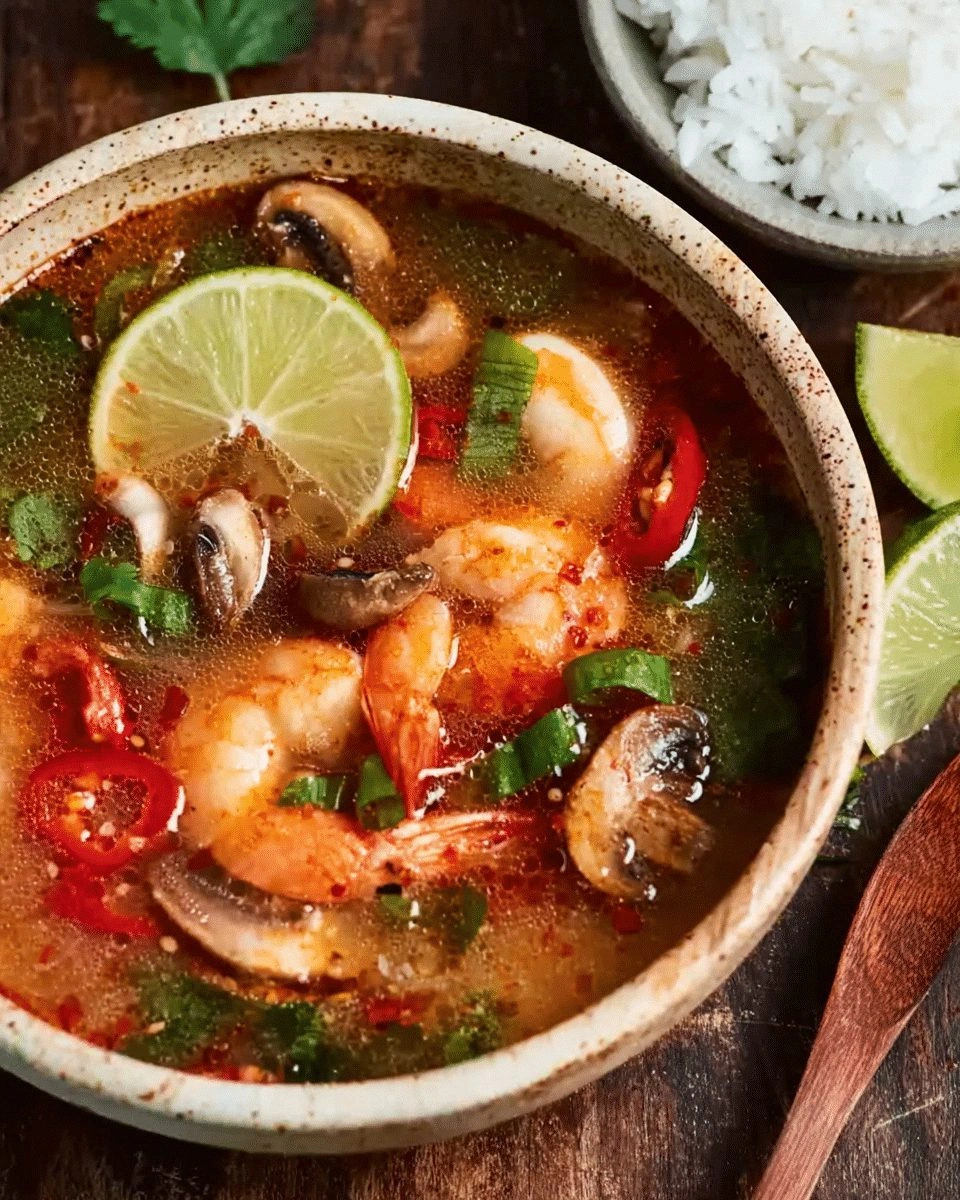
The Method — Step by Step
- Prep the aromatics. Slice the lemongrass into 1‑inch pieces and bruise it with the back of a knife to release oils. Thinly slice the galangal and chop the kaffir lime leaves into smaller pieces. This step is crucial because it unlocks the full depth of flavor in the broth.
- Build the broth. In a large pot, bring 4 cups of water or light chicken stock to a rolling boil. Add the lemongrass, galangal, and kaffir lime leaves. Let the mixture simmer for 10 minutes, allowing the aromatics to infuse the liquid. If you’re using coconut milk, set it aside for later.
- Introduce the vegetables. Add the sliced onion, diced tomato, and sliced fresh chilies to the pot. Stir gently and let the mixture simmer for another 5 minutes. The vegetables should soften slightly but still retain a bite; this balances the broth’s sharpness.
- Season the broth. Stir in 3 tablespoons of fish sauce, 3 tablespoons of lime juice, 1 teaspoon of sugar, and 0.5 teaspoons of white pepper. Taste and adjust: if it’s too salty, add a splash of water; if it needs more heat, add another chili.
- Sear the shrimp. Heat a tablespoon of oil in a separate pan over medium‑high heat. Add the shrimp and sear for 30 seconds on each side until they turn pink and develop a slight crust. This step locks in flavor and gives the shrimp a luxurious texture.
- Add the shrimp to the broth. Gently slide the seared shrimp into the pot and let them cook for 3 minutes. The shrimp should be opaque and tender, not rubbery. This is the moment of truth—watch the colors shift.
- Finish with fresh herbs. Remove the pot from heat and stir in the chopped cilantro. If you’re using coconut milk, drizzle it in now and give the soup a quick stir. The coconut adds a subtle creaminess without drowning the bright flavors.
- Serve immediately. Ladle the soup into bowls, ensuring each portion gets a generous share of shrimp and vegetables. A final squeeze of lime or a dash of fish sauce on the side lets diners customize the taste to their liking.
That's it — you did it. But hold on, I've got a few more tricks that'll take this to another level...
Insider Tricks for Flawless Results
The Temperature Rule Nobody Follows
Heat control is everything. Keep the broth at a steady, gentle simmer once you’ve added the shrimp. A rolling boil will scorch the delicate flavors and cause the shrimp to overcook. A low simmer allows the aromatics to mingle without losing their bright notes.
Why Your Nose Knows Best
Smell the broth at every stage. If it smells like burnt garlic, you’ve gone too far. If it’s too flat, add a splash of lime or a pinch of sugar. Your nose is the most reliable judge of balance in this dish.
The 5‑Minute Rest That Changes Everything
After you finish cooking, let the soup rest for five minutes before serving. This brief pause allows the flavors to marry and the chilies to mellow. It also gives the shrimp time to absorb the aromatic broth.
The Quick Shrimp Sear
Seared shrimp adds a subtle caramelized flavor that plain boiled shrimp lacks. Use a hot pan and a single tablespoon of oil. Sear each side for 30 seconds; the shrimp should just start to turn pink.
The Coconut Milk Balancer
If you prefer a creamier soup, add 100 ml of coconut milk at the end. Stir until the milk is fully incorporated and the broth has a silky sheen. Keep the amount moderate to maintain the signature brightness.
The Final Lime Splash
A squeeze of lime right before serving amplifies the acidity and lifts the entire dish. Add lime juice to taste; a tablespoon is usually enough for four servings.
Creative Twists and Variations
This recipe is a playground. Here are some of my favorite ways to switch things up:
Tom Yum with Chicken
Swap shrimp for bite‑size chicken pieces. Cook the chicken in the broth until tender, then finish with the same aromatics. The result is a hearty, comforting soup that’s still bright and spicy.
Tom Yum with Tofu
Use firm tofu for a vegetarian version. Press the tofu to remove excess moisture, then cube and lightly fry before adding to the broth. The tofu absorbs the flavors wonderfully.
Tom Yum with Seafood Mix
Add a handful of mussels, clams, or squid along with the shrimp. The briny seafood layers add depth and complexity, making the soup feel like a full‑blown ocean feast.
Tom Yum with Egg
Whisk an egg into the hot broth for a silky, egg‑strawberry texture. Stir in a slow, steady stream to create thin ribbons of egg that mingle with the shrimp.
Tom Yum with Coconut Cream
Replace the coconut milk with coconut cream for a richer, more decadent soup. The creaminess balances the heat and acidity, turning the dish into a luxurious comfort food.
Tom Yum with Spicy Peanut Sauce
Drizzle a spoonful of spicy peanut sauce over the finished soup. The nutty, sweet, and spicy profile adds an unexpected twist that pairs beautifully with the bright broth.
Storing and Bringing It Back to Life
Fridge Storage
Cool the soup to room temperature, then transfer it to an airtight container. Store in the refrigerator for up to 2 days. The flavors will deepen slightly, so a quick reheat will bring them back to their original brightness.
Freezer Friendly
Divide the soup into single‑serving portions and freeze for up to 3 months. When you’re ready to eat, thaw overnight in the fridge. Reheat gently on the stove, adding a splash of water to restore the broth’s consistency.
Best Reheating Method
Reheat the soup over low heat, stirring occasionally. Add a small splash of water or broth if the soup has thickened. Avoid boiling, as this can cause the shrimp to become rubbery and the broth to lose its bright flavor.