Picture this: The kitchen clock ticks, the fridge door slams open, and you’re staring at a pile of lasagna noodles, a can of crushed tomatoes, and a pot that’s just begging for something delicious. You’ve been craving that comforting, hearty bowl of pasta‑soup hybrid for weeks, but every recipe you’ve tried ends up either too watery or too dry, with noodles that clump like a bad relationship. I was in that exact spot last night, tossing a handful of noodles into a pot, feeling the panic rise like a simmering broth. Suddenly, a friend texted, “Try this lasagna soup, it’s a game‑changer.” I was skeptical, but I dared you to taste this and not go back for seconds. The result? A sauce that coats the noodles like velvet, a savory beef base that sings, and a creamy ricotta finish that lingers on the palate. I’m not exaggerating when I say this is hands down the best version you’ll ever make at home. Let me walk you through every single step — by the end, you’ll wonder how you ever made it any other way.
First, let’s talk about the foundation. The olive oil isn’t just a cooking medium; it’s the first layer of flavor that carries the ground beef and aromatics into a golden, fragrant base. Ground beef, when browned properly, releases a deep umami that becomes the backbone of the soup, while the minced onion and garlic sauté to a translucent, sweet aroma that hints at the tomato’s acidity. Crushed tomatoes bring the acidity and body, while the bay leaf and dried herbs infuse a subtle herbal complexity that reminds you of a slow‑cooked Italian stew. The broth and water bring everything together, creating a silky broth that doesn’t overwhelm but enhances every element. And the lasagna noodles? They’re broken to bite‑sized pieces that absorb the sauce like a sponge, giving you that “pasta in soup” feel without the mushy mess.
What sets this recipe apart is the way it balances texture and flavor. The noodles are cooked to al dente, so each bite offers a satisfying chew that contrasts with the smooth ricotta swirls. The ricotta is added at the end, melting into the broth without curdling, creating pockets of creaminess that contrast with the sharp Parmesan on top. The red pepper flakes provide a subtle heat that cuts through the richness, while the dried basil, parsley, and oregano tie the flavors together with a herby finish. The sauce’s thickness is just right—thick enough to cling to the noodles but thin enough to sip. And the best part? It’s a one‑pot wonder that saves you from the endless cleanup of traditional lasagna. I’ll be honest—I ate half the batch before anyone else got to try it, and the leftovers were still as good the next day.
Most recipes get this completely wrong, either by over‑cooking the noodles or under‑seasoning the broth. Here’s what actually works: brown the beef until it’s a rich mahogany, sauté the aromatics until they’re fragrant but not burnt, and let the tomato and broth simmer long enough to meld flavors. The noodles should be added in the last 10 minutes, just enough to soften without turning into mush. I dare you to taste this and not go back for seconds. If you’ve ever struggled with a lasagna‑in‑soup recipe, you’re not alone — and I’ve got the fix. Picture yourself pulling this out of the pot, the whole kitchen smelling incredible, and feeling that satisfaction that only a homemade bowl of soup can bring.
What Makes This Version Stand Out
- Richness: The combination of browned ground beef, tomato, and broth creates a depth that’s impossible to achieve with canned soups or pre‑made sauces. Each spoonful feels like a hearty Italian dinner.
- Texture: The broken lasagna noodles stay firm, providing a satisfying bite that contrasts with the creamy ricotta and smooth broth.
- Ease: One pot, minimal prep, and no need for a separate baking step. It’s the perfect weeknight dinner for busy cooks.
- Versatility: Swap ground beef for turkey, add mushrooms, or use a different pasta shape—this base adapts to whatever you have on hand.
- Make‑ahead: The soup keeps well in the fridge for up to 4 days and freezes beautifully, making it a great batch‑cooking option.
- Flavor Balance: The herbs and spices are calibrated to give you a bright, herby finish without overpowering the beef or tomato.
- Nutritional Profile: With a decent protein hit and moderate carbs, it’s a balanced meal that satisfies without feeling heavy.
- Presentation: The final garnish of Parmesan and fresh basil turns a simple soup into a restaurant‑style dish.
Alright, let's break down exactly what goes into this masterpiece...
Inside the Ingredient List
The Flavor Base
Olive Oil: It’s the first thing that gets heated, and its subtle fruitiness carries the beef’s savory notes. A tablespoon is enough to coat the pan and prevent sticking, but if you’re a fan of extra richness, feel free to add a splash more. Skipping it will leave the beef dry and less flavorful. For a healthier twist, use extra‑virgin olive oil; it adds a peppery finish that brightens the broth.
Ground Beef: The star of the dish, it provides protein and a meaty depth that’s essential. Use 80/20 for the best balance of fat and flavor—too lean and the soup will be dry. If you’re watching calories, 90/10 works, but you’ll need to add a bit more broth to compensate for the leaner texture. Don’t rush the browning; let the fat render and the meat develop a deep brown crust.
Minced Onion & Garlic: These aromatics build the flavor foundation. They should be sautéed until translucent, not browned, to avoid bitterness. The garlic’s 2 tablespoons add a punch of pungency that balances the tomato’s acidity. If you’re sensitive to garlic, reduce to 1 tablespoon; the dish will still be robust.
The Texture Crew
Crushed Tomatoes: They provide body and acidity. 28 ounces is a generous amount that keeps the soup hearty. If you prefer a smoother broth, use a blender to puree the tomatoes before adding. Fresh tomatoes can be used in a pinch, but they’ll release more liquid, so reduce the broth accordingly.
Lasagna Noodles: Broken into bite‑sized pieces, they absorb the sauce and maintain a firm bite. Use reginetti or any short pasta that can be broken easily. If you’re making a low‑carb version, substitute with spiralized zucchini or shirataki noodles—just be careful not to overcook.
Beef Broth & Water: The broth gives depth, while the water balances the thickness. Four cups of low sodium broth keep the soup flavorful without excessive salt. If you’re using a high‑sodium broth, reduce the water to 1 cup to avoid a salty soup. For a richer taste, use beef stock instead of broth.
The Unexpected Star
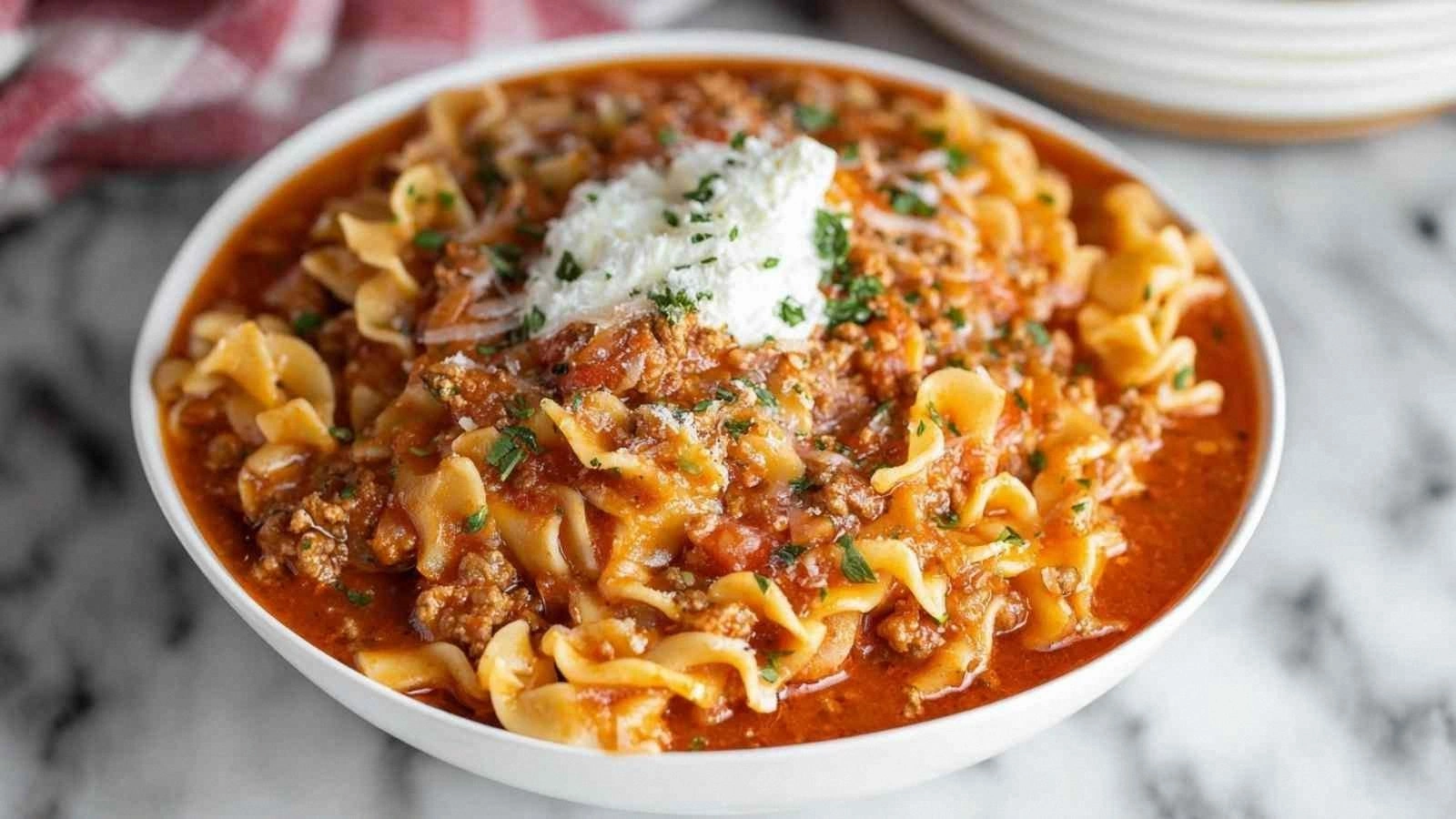
Ricotta Cheese: Added at the end, it melts into the broth, creating pockets of creamy texture. A quarter cup per batch is enough to give that luxurious finish without overpowering the tomato. If you’re vegan, substitute with a plant‑based ricotta alternative. Keep the ricotta at room temperature before adding; cold ricotta can curdle.
The Final Flourish
Parmesan Cheese: Grated on top before serving, it melts into the hot broth, adding a nutty, salty finish. A quarter cup per batch is sufficient; feel free to add more if you love cheesy soup. Freshly grated Parmesan has a stronger flavor than pre‑grated. If you’re lactose intolerant, use a hard cheese that’s lower in lactose, such as aged cheddar or a vegan parmesan.
Everything's prepped? Good. Let's get into the real action...
The Method — Step by Step
- Heat the olive oil in a large stockpot over medium heat. Add the ground beef and cook, breaking it apart with a wooden spoon, until it’s a deep, caramelized brown. The sizzle should sound like a happy dance. Don’t rush this step; the browning builds the savory backbone of the soup.
- Add the minced onion and garlic to the pot. Sauté until the onion turns translucent and the garlic releases its perfume—about 3 to 4 minutes. Stir constantly so the garlic doesn’t burn. This aromatics layer is what turns a simple broth into a gourmet experience.
- Stir in the crushed tomatoes, bay leaf, dried basil, parsley, oregano, black pepper, and red pepper flakes. Give the mixture a good stir so the spices distribute evenly. The sauce should thicken slightly and emit a toasty aroma. The bay leaf is a secret weapon that adds depth without overpowering.
- Pour in the beef broth and water, stirring to combine. Bring the mixture to a gentle simmer, then reduce the heat to low. The broth should bubble softly, not a rolling boil. This slow simmer melds the flavors together and allows the tomatoes to thicken.
- Add the broken lasagna noodles to the pot. Stir to ensure they’re submerged in the liquid. Cover and let the soup simmer for 15 minutes, stirring occasionally to prevent sticking. The noodles should be al dente—firm yet tender.
- Stir in the ricotta cheese, allowing it to melt into the broth. The ricotta should create silky pockets that contrast with the tomato. After the ricotta has fully incorporated, sprinkle the grated Parmesan over the top. The cheese will melt into the hot soup, adding a nutty finish.
- Taste the soup and adjust seasoning as needed. Remove the bay leaf. Ladle the soup into bowls, ensuring each spoonful gets a good mix of noodles, ricotta, and Parmesan. Garnish with a sprinkle of fresh basil or extra Parmesan if desired. Serve hot, and enjoy the comforting warmth.
That's it — you did it. But hold on, I've got a few more tricks that'll take this to another level. The next section is packed with insider knowledge that will elevate your soup from good to unforgettable.
Insider Tricks for Flawless Results
The Temperature Rule Nobody Follows
Cooking the beef at the right temperature is essential. Start with medium heat to allow the fat to render, then lower to medium‑low for the simmer. If you keep the heat too high, the broth will evaporate too quickly, leaving a thick, concentrated soup. Conversely, too low a heat can result in a watery broth that never develops depth.
Why Your Nose Knows Best
Your sense of smell is your most reliable seasoning guide. As the soup simmers, you’ll notice the aroma shift from raw beef to a rich, tomato‑herb bouquet. When the broth starts to thicken and the noodles are almost done, the scent will be sweet and comforting—time to taste and adjust.
The 5-Minute Rest That Changes Everything
After you remove the pot from heat, let the soup rest for five minutes before serving. This short pause allows the flavors to settle, the noodles to finish absorbing the broth, and the ricotta to set into creamy pockets. A quick rest also prevents the soup from boiling over when you ladle it into bowls.
Stirring Technique for Smoothness
Use a wooden spoon or silicone spatula to stir, not a metal utensil that can cause the broth to foam. Stir gently but consistently, especially when adding the ricotta, to prevent curdling. The goal is a silky, cohesive mixture where every spoonful feels the same.
Choosing the Right Broth
Low‑sodium beef broth is ideal, but if you prefer a richer taste, opt for a beef stock. The stock’s higher gelatin content gives the soup a silky mouthfeel. If you’re vegetarian, a vegetable stock works, but you’ll need to adjust the seasoning to compensate for the lack of beef flavor.
Adding a Splash of Acid
A splash of red wine or a squeeze of lemon juice at the end brightens the soup and cuts through the richness. Add it after you’ve removed the bay leaf to avoid altering the flavor profile during simmering. This small addition can transform a good soup into a memorable dish.
Creative Twists and Variations
Mediterranean Twist
Swap the ground beef for ground lamb and add chopped olives, sun‑dried tomatoes, and a pinch of oregano. This version delivers a briny, aromatic flavor profile that feels like a trip to the Mediterranean. The olives add a subtle crunch, while the sun‑dried tomatoes bring a sweet depth. It’s a perfect dinner for a summer evening.
Vegetarian Delight
Replace the beef with a hearty mix of lentils, diced carrots, and mushrooms. The lentils provide protein while the mushrooms add umami. Use a vegetable broth for a lighter, plant‑based version. Finish with a drizzle of truffle oil for a decadent touch.
Spicy Korean Fusion
Add gochujang (Korean chili paste) and a splash of sesame oil to the sauce. Replace the oregano with Korean galangal and add sliced scallions at the end. The result is a soup that’s spicy, nutty, and deeply comforting. It’s a great way to introduce Korean flavors into a classic Italian base.
Low‑Carb Version
Substitute the lasagna noodles with spiralized zucchini or shirataki noodles. Keep the rest of the ingredients the same for a low‑carb, high‑protein meal. The noodles will absorb the sauce just as well, giving you the same comforting texture without the carbs.
Cheesy Supreme
Add shredded mozzarella and a handful of shredded cheddar to the pot just before serving. The cheeses will melt into the soup, creating a gooey, melty layer that feels like a lasagna casserole. The combination of cheeses adds a complex flavor profile and a satisfying mouthfeel.
Breakfast Breakfast
Serve the soup with a fried or poached egg on top. The runny yolk adds richness and creates a velvety sauce that coats the noodles. It’s a hearty breakfast that feels like a late‑night snack, perfect for a cozy weekend morning.
Storing and Bringing It Back to Life
Fridge Storage
Cool the soup to room temperature before transferring it to an airtight container. Store in the fridge for up to four days. The broth will thicken slightly as it cools, so a quick stir before reheating will restore the original consistency.
When you’re ready to reheat, place the soup in a saucepan over medium heat. Add a splash of water or broth to loosen it up, then bring to a gentle simmer. Keep stirring to prevent scorching.
Freezer Friendly
Portion the soup into freezer‑safe containers, leaving an inch of headspace for expansion. Label with the date and freeze for up to three months. Thaw overnight in the fridge, then reheat as described above.
If you’re in a hurry, the soup can be microwaved in a mug or bowl, stirring halfway through for even heating. The noodles will remain tender, and the ricotta will melt into a creamy finish.
Best Reheating Method
The stovetop method preserves the soup’s texture and flavor better than the microwave. Add a tiny splash of water before reheating—it steams the soup back to its original consistency. If you’re reheat‑ready, bring to a gentle simmer and stir until hot.
Now you’re armed with everything you need to master Easy Lasagna Soup. Whether you’re a seasoned chef or a kitchen rookie, this recipe will become a staple in your culinary repertoire. Enjoy every spoonful, share it with friends, and watch their faces light up like a pot of simmering broth.