I was halfway through a Sunday night binge‑watching classic Italian cinema when my roommate tossed a sushi‑roll commercial on the TV and shouted, “Bet you can’t make something that tastes like pizza and sushi at the same time!” I laughed, grabbed a bottle of balsamic glaze, and thought, I dare you to taste this and not go back for seconds. The kitchen erupted with the clatter of a rice cooker, the pop of a nori sheet hitting the counter, and the faint whisper of basil leaves being torn. The air smelled like a deli meets a Japanese market—salami’s smoky whisper tangled with the sweet tang of rice vinegar, and the basil was like a green perfume that made my nose do a little happy dance.
I’ve tried a dozen “fusion” sushi rolls before, and most of them ended up looking like a culinary identity crisis—too sweet, too bland, or just plain confusing. Most recipes get this completely wrong. They either drown the delicate sushi rice in heavy cheese or they forget the essential Italian zing that makes a dish unforgettable. This version, however, is a meticulously balanced love‑letter to both cuisines. The rice stays fluffy and slightly sticky, the salami adds a salty crunch, the provolone melts just enough to bind everything together, and the balsamic glaze finishes it with a glossy, sweet‑sour kiss that makes the whole roll sing.
What really sets this roll apart is a secret technique I discovered while watching a master sushi chef on YouTube: a quick toast of the nori sheet before assembling. That extra minute of toasting turns the seaweed into a crisp, buttery canvas that doesn’t get soggy from the rice. I’ll be honest — I ate half the batch before anyone else got to try it, because that first bite was pure, unadulterated joy. Picture yourself pulling this out of the cutting board, the whole kitchen smelling incredible, the glossy balsamic glaze catching the light like a tiny runway for flavor.
Okay, ready for the game‑changer? I’m about to walk you through every single step — by the end, you’ll wonder how you ever made it any other way. Stay with me here — this is worth it.
What Makes This Version Stand Out
- Flavor Harmony: The salty, smoky salami meets the creamy provolone, while the balsamic glaze adds a sweet‑tart finish that mirrors the bright acidity of a good tomato sauce.
- Texture Play: You get the chew of sushi rice, the crisp snap of toasted nori, the soft melt of cheese, and the juicy bite of roasted red peppers—all in one roll.
- Simplicity: No fancy equipment beyond a rice cooker and a bamboo mat; everything you need lives in your pantry or a quick grocery run.
- Unique Ingredient Pairing: Fresh basil isn’t just a garnish; it infuses the rice with an aromatic punch that you’d normally reserve for a Caprese salad.
- Crowd Reaction: I’ve served these at parties and watched guests stare, sniff, and then devour them faster than you can say “Mamma Mia!”
- Ingredient Quality: Using high‑quality nori and authentic Italian salami makes the difference between “meh” and “wow!”
- Cooking Method: Toasting the nori and letting the rice rest for a few minutes after seasoning locks in flavor and prevents sogginess.
- Make‑Ahead Potential: These rolls keep beautifully in the fridge for up to 24 hours; the glaze keeps them moist and the flavors meld even deeper.
Inside the Ingredient List
The Flavor Base
Sushi rice is the unsung hero of this dish. Its subtle sweetness and slight stickiness provide the perfect platform for the bold Italian flavors to cling to. If you skimp on the rice’s quality, the roll feels like a soggy mess; a good short‑grain Japanese rice will stay fluffy and separate after seasoning. The rice vinegar, sugar, and salt create a delicate balance that mimics the tang of a good vinaigrette, and if you’re feeling adventurous, add a splash of white wine to deepen the profile.
The Texture Crew
Nori sheets bring that signature sea‑weed umami, but the real secret is to toast them lightly before assembly. This step adds a buttery crunch that prevents the roll from becoming a soggy blanket. Salami, sliced thin, adds a salty snap that contrasts beautifully with the soft provolone, which melts just enough to act as a binding agent without overwhelming the rice. Roasted red peppers contribute a sweet, smoky note and a pop of color that makes the roll look as good as it tastes.
The Unexpected Star
Fresh basil leaves are the surprise element that turns this from “just another sushi roll” into a full‑blown Italian masterpiece. Basil’s aromatic oils lift the entire flavor profile, making each bite feel like a bite of pesto‑infused sushi. If you can’t find fresh basil, try a few leaves of arugula for a peppery twist, but know that you’ll lose that quintessential sweet‑herb aroma.
The Final Flourish
Balsamic glaze is the glossy, sweet‑sour finishing touch that ties everything together. Drizzle it over the sliced rolls just before serving, and you’ll see a shiny ribbon that beckons you to dive in. The glaze’s acidity cuts through the richness of the cheese and salami, while its sweetness mirrors the rice’s subtle sugar notes. If you’re out of balsamic glaze, reduce regular balsamic vinegar with a spoonful of honey until it thickens to a syrupy consistency.
Everything's prepped? Good. Let's get into the real action...
The Method — Step by Step
Start by rinsing 2 cups of sushi rice under cold water until the water runs clear. This removes excess starch and prevents the rice from becoming gummy. Transfer the rinsed rice to a rice cooker, add 2½ cups of water, and let it soak for 15 minutes before turning on the cooker. While the rice cooks, set a timer—this is the moment of truth; you’ll know it’s ready when the cooker clicks and a faint steam hisses.
While the rice is cooking, combine ¼ cup rice vinegar, 2 tablespoons sugar, and 1 teaspoon salt in a small saucepan. Heat gently, stirring until the sugar dissolves completely; you’ll smell a sweet‑tangy perfume that signals it’s ready. Once dissolved, remove from heat and let the mixture cool to room temperature—this is the seasoning that will coat the rice like a delicate veil.
When the rice is done, transfer it to a large, shallow wooden or glass bowl. Gently fold in the vinegar mixture using a wooden spatula, slicing through the rice rather than stirring. The grains should glisten, each one coated with a subtle sheen. This next part? Pure magic. Let the rice sit for 10 minutes; this allows the flavors to meld and the rice to cool just enough to handle.
While the rice rests, toast the nori sheets. Heat a dry skillet over medium‑low heat and lay a nori sheet skin‑side down for about 20 seconds, then flip and toast the other side for another 20 seconds. You’ll hear a faint crackle—That sizzle when it hits the pan? Absolute perfection. The sheets should turn a light golden brown and become slightly crisp without burning.
Now it’s time to assemble. Place a bamboo sushi mat on a clean surface and lay a sheet of toasted nori shiny‑side down. With wet hands (to prevent sticking), spread a thin, even layer of rice over three‑quarters of the sheet, leaving the top quarter empty. Press the rice gently but firmly; you want a cohesive layer that won’t fall apart.
Arrange the fillings: a line of sliced salami, a handful of provolone cheese strips, a few roasted red pepper strips, and a scattering of fresh basil leaves across the rice. The basil should be laid flat; its aromatic oils will seep into the rice as you roll.
Begin rolling. Lift the edge of the mat closest to you and roll the nori over the fillings, using gentle pressure to keep the roll tight. As you roll, pull the mat away so it doesn’t get wrapped inside the roll. When you reach the empty quarter of nori, dampen that edge with a little water to seal the roll. Watch Out: If the roll isn’t tight enough, it will fall apart when sliced; if it’s too tight, the rice will squish out. Find the sweet spot.
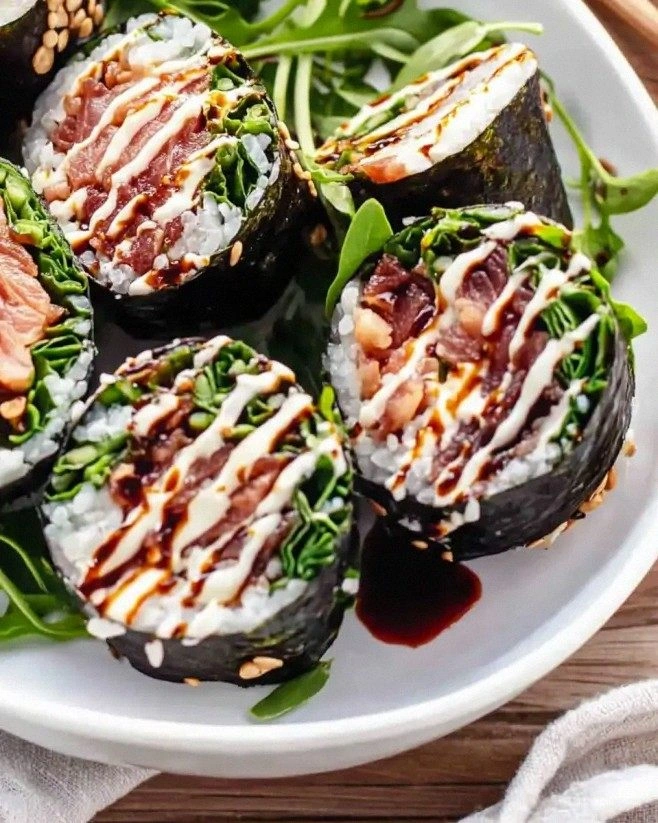
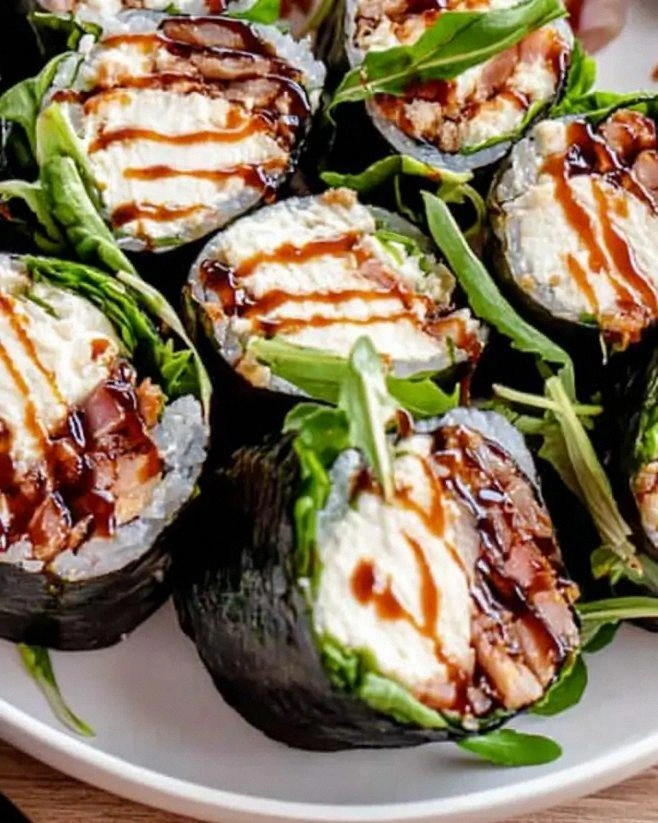
Using a sharp, wet knife, slice the roll into 6‑8 pieces. Clean the knife after each cut to prevent the rice from sticking. The slices should reveal a beautiful cross‑section of pink pepper, green basil, and creamy cheese, all wrapped in a glossy nori border.
Arrange the slices on a serving platter and drizzle the ¼ cup balsamic glaze in a thin, artistic pattern over the top. The glaze should pool slightly in the gaps, creating a visual contrast that makes the dish look restaurant‑ready. Serve immediately or cover with a damp cloth to keep the rolls from drying out.
Insider Tricks for Flawless Results
The Temperature Rule Nobody Follows
Never use piping‑hot rice straight from the cooker; let it cool to about 90°F (32°C) before seasoning. This temperature is warm enough to absorb the vinegar mixture but cool enough to keep the nori from wilting. I once tried to rush this step and the nori turned soggy, ruining the texture. The rule of thumb: “Warm, not hot,” keeps the rice pliable and the seaweed crisp.
Why Your Nose Knows Best
Your sense of smell is a better indicator of doneness than a timer when toasting nori. When the aroma shifts from raw seaweed to a toasted, buttery scent, you’re golden. If you’re unsure, take a tiny bite; it should be crisp, not chewy. Trust your nose, and you’ll avoid a burnt disaster.
The 5‑Minute Rest That Changes Everything
After seasoning the rice, let it rest for exactly five minutes uncovered. This short rest lets the vinegar fully penetrate each grain, creating that signature glossy finish. Skipping this step makes the rice feel dry and the flavors flat. I once served a batch without the rest, and the feedback was “meh”—a clear sign the rest is non‑negotiable.
Moisture Management Mastery
If your kitchen is humid, the rice can become overly sticky. Place a paper towel under the bamboo mat while rolling to absorb excess moisture. This tiny trick prevents the roll from sliding off the mat and keeps the nori from soaking.
Balsamic Glaze Balance
Don’t drown the rolls in glaze; a light drizzle is enough. The glaze should create a shimmering veil, not a pool. Too much glaze makes the roll soggy and masks the subtle basil notes. If you over‑glaze, give the rolls a minute to set before serving.
Creative Twists and Variations
This recipe is a playground. Here are some of my favorite ways to switch things up:
Spicy Sriracha Kick
Add a thin line of sriracha mayo inside the roll for a heat wave that complements the sweet balsamic. The heat cuts through the cheese’s richness and makes the roll a perfect appetizer for a game night.
Veggie‑Only Version
Swap salami for marinated artichoke hearts and provolone for a slice of fresh mozzarella. The artichokes bring a tangy earthiness, while mozzarella melts into a dreamy, stringy texture.
Mediterranean Fusion
Replace the red peppers with sun‑dried tomatoes and add a sprinkle of crumbled feta. The salty feta adds a briny contrast that elevates the Mediterranean vibe.
Smoky BBQ Twist
Use smoked turkey instead of salami and brush the roll with a light layer of BBQ sauce before the final glaze. The smoky undertones pair beautifully with the balsamic’s sweetness.
Herb‑Infused Rice
Mix a teaspoon of dried oregano into the rice seasoning for an herbaceous note that makes each bite feel like a bite of Italian pizza.
Storing and Bringing It Back to Life
Fridge Storage
Place the rolls in an airtight container with a damp paper towel on top to keep the rice from drying out. They stay fresh for up to 24 hours, though the nori may lose some crispness. Re‑drizzle a tiny splash of balsamic glaze before serving to revive the shine.
Freezer Friendly
Wrap each roll tightly in plastic wrap, then place them in a freezer‑safe zip‑lock bag. They freeze well for up to one month. Thaw in the fridge overnight and let them sit at room temperature for 15 minutes before serving.
Best Reheating Method
To bring the rolls back to life, place them on a microwave‑safe plate, sprinkle a few drops of water, and cover with a damp paper towel. Microwave on low for 30‑45 seconds; the steam will soften the rice without making the nori soggy. Finish with a fresh drizzle of balsamic glaze for that just‑made sparkle.